An island in the far eastern Mediterranean Sea, below Turkey and to the west of Syria, Cyprus is is actually two countries - the Turkish Republic of Northern Cyprus (recognised only by Turkey) and the southern Republic of Cyprus. There are two large mountain ranges on the island: the Kyrenian Range in North Cyprus and the Troödos Massif in the centre of the Republic. The northern mountains are mainly limestone, the southern are volcanic rock. These ranges are separated by the Mesaoria Plain.
Cyprus has always been an island, and many Cypriot species, particularly plants, are found nowhere else in the world. There are three main habitats in Cyprus: the mountain ranges, the coastal plains and the cultivated lands. The coastal plains are irrigated by seasonal streams, and some support citrus orchards, but native flora and fauna have been largely displaced by tourism. The best areas to see wildlife are the mountainous areas of the island and the Akamas Peninsula (which, although not a national park, has been managed for conservation). The North, being less touristed, also has a larger population of native flora and fauna. Keep an eye out for griffon vultures, foxes, fruit-eating bats, sea turtles and moufflon, a wild sheep endemic to Cyprus.
The Cypriot climate is typically Mediterranean, with very hot summers in July and August. Most of the year is dry, with unpredictable rains falling in December, January and February. Cyprus often suffers drought years, and water is such a scarce commodity that it is often rationed.
Total area includes 3355 sq km in North Cyprus.
Population
771,657 (July 2003 est.)
Area
9,250 sq km (of which 3,355 sq km are in the Turkish Cypriot area)
Ethnicity/ Race
Greek 85.2%, Turkish 11.6%, other 3.2% (2000)
Major Languages
Greek, Turkish, English
Religion
Greek Orthodox 78%, Muslim 18%, Maronite, Armenian Apostolic, and other 4%
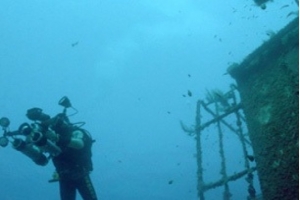
Larnaka Bay in Cyprus is the undersea home of probably the world's best known diving site - The wreck of the Zenobia, a Swedish passenger ferry that sank on her maiden voyage in 1980.
This diving site offers a whole new experience every single time and works for beginners too. It is one of the most famous wrecks also for scuba diving.
It is fairly characterized and classified as one of the "top 10 ship wrecks" due to its short distance from the shore, its incredible marine life, and its considerably accessible depth for recreational diving and technical diving.
The sea bed is a depth of 42 meters, and the top of the wreck is at 16 meters below the surface. Water temperatures range from 18°c in winter and up to 27ºc in summer.
Recently a group of divers from UAE visited the site in coordination with our office.